Large numbers of Korean began to settle in the UK in the 1980s, North Korean defectors have also sought asylum in England. Many of them forge new lives with hope and encouragement, but some of them lived on the margins of Britain, who were involved in drugs and alcohol addictions, and suffered from emotional wounds.
John Betsworth (Not his real name), a 29-year-old gym coach, tells his bittersweet memories of his mother, Kim, a North Korean Defector in London.
Kim was a soldier in North Korea in the 1970s. When a large of amount of Koreans began to settle in the UK in the 1980s, Kim’s was one of them.
She killed other soldiers in order to escape from the brutal regime in Pyongyang, because she accidentally told them that she planned to leave the country, thus she murdered them to “shut their mouth”.
In North Korea, “If you have an idea of escaping you can’t even tell your closest friend, because that friend will tell somebody and you will be executed”. John demonstrates.
Soon Kim fled to South Korea then to England in the 1980s’. A few years after she met her Irish partner and John, their son, was born in London in the early 1990s. Kim kept her past to herself for all her life.
Kim paid a tremendous price for what she did to sacrifice, in order to escape from North Korea. According to John, his mother, Kim, took a lot of drugs and alcohol to numb her emotional wounds from her past experience of killing her own soldiers who were very close to her.
“When I was 4-year-old, I remember one day my mom suddenly left our house, I think she took drugs that night. I didn’t know where she went and I was starving and cold, so I went outside to look for her. The police found me walking on the street at night on my own.”
As a result, John was taken away from his mother by the local government and had been sent to a Children’s Home in Islington, North-West London in 1996.
Since then, John and Kim were separated for 14 years, until John turned 18 in 2020.
John spent 2 years in the Children’s Home, then being adopted by an English couple in 1998.
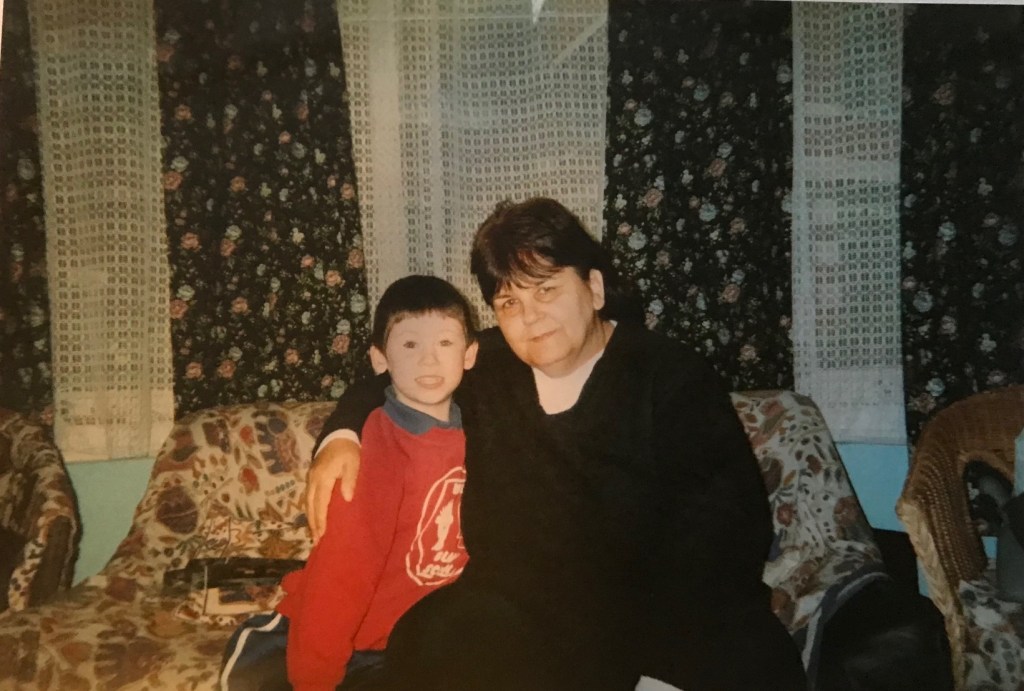
In 2020, Kim and John met again in a café in London, after being separated for 14 years, when John turned 18 as an adult.
“I was a little bit nervous about meeting her, at the same time very excited.” John remembers, “Both of us were quite tense, we didn’t speak to each other for a couple of minutes then slowly, we relaxed.”
Kim gradually told her life stories to his son, when they started to meet up every weekend. “She wasn’t happy in London. People were afraid of her because she was different, although she never mentioned that she was North Korean to anyone.
During the 14-years separation from her son, Kim worked as a cleaner in London for a living. “She never had any friends, because she wasn’t confident about herself due to her past in North Korea, or maybe because she wasn’t surrounded by her own culture and she felt uncomfortable. When she passed away, I was the only one who went to her funeral.” Says John.
Kim was happy to escape from her own country and be free, on the other hand, she felt alone.
John’s life wasn’t easy neither. He was born with Fetal Alcohol Syndrome, which caused his disabilities in learning when he was young, due to his mother’s addictions to alcohol and drugs during pregnancy. “When I was small, my mother only spoke to me in Korean when I was with her. I started to fully understand English when I was 10-year-old.” John demonstrates.
Although Kim experienced a lonely and tough life in London, she still encouraged her son to be brave towards life, and inherit the North Korean spirit of being an unstoppable survivor.
Kim told his son that “You might have learning difficulties for a special reason, but always remember you are my son, you came from a warrior-class, you are more than what you think. You need to know where your strengths are.”
“It wasn’t easy for her, things like that (killing other soldiers to escape) did get to her, especially those people were close to her.” Says John.
John felt very angry with his mother when she took drugs and alcohol to ease her memories of killing other people in North Korea. Eventually, he turned his hatred and anger into forgiveness, love, and acceptance to his mother.
“I had mixed feelings for her.” Says John, “I was very angry with her because she mistreated me, didn’t raise me well and brought me all these problems. (the ‘Fetal Alcohol Syndrome’ effects when John was born).”
On the other hand, John forgave his mom because he started to understand what Kim had to sacrifice to escape from the regime in North Korea. “Life can be very hard, I experienced that for myself. I know no one is perfect in life, and I know what she did gets to her. She didn’t have nobody else, she only had me. It broke her into pieces when I was taken away from her. She didn’t know what to do, she felt like her heart was taken away from her.”
In 2013, Kim passed away in London, her dramatic life came to an end. Her “life and death” decision to escape from Pyongyang didn’t reinvigorate her life. The North Korean defector lived her life in London with loneliness and guilty thoughts.

 Journalism Stories